You are not expected to know what to do right now — this page will walk you through it step by step.
If you or your child were arrested in College Station or Bryan, read this first.
If you or your child were arrested in College Station or Bryan, the next 24–48 hours can feel overwhelming.
You probably have questions right now:
Are they going to stay in jail?
Will they lose their driver’s license?
Should they call the police back?
What happens at the first court date?
Is this going to affect school or scholarships?
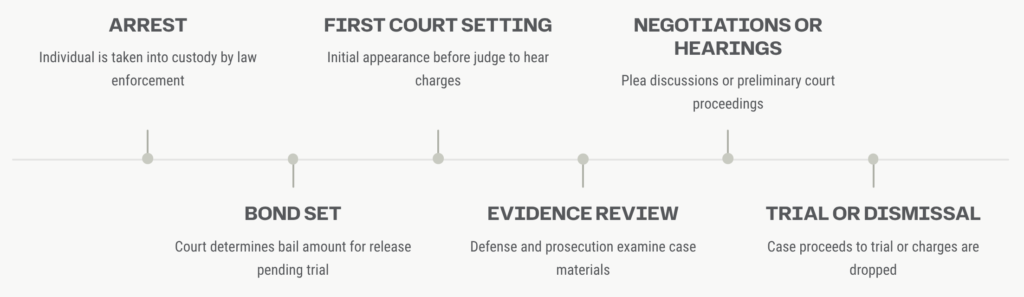
This page explains what typically happens after an arrest in Brazos County and what you should — and should not — do immediately.
You do not need to figure everything out tonight. But there are a few important things you should know right away.
If you only read one thing today, read this first. This guide explains what happens after an arrest in Brazos County and the mistakes that most often make situations worse.
This resource was prepared by Spiegelhauer Law, a criminal defense practice serving Brazos County and the surrounding area.
If you still have questions about the process, you are welcome to call or text our office. We are happy to help you understand what is happening, even if you are not sure whether you need an attorney.
You do not have to make any decisions today. Calling is only for understanding what happens next.
Phone: (979) 450-7250
This page is general legal information and not legal advice. Viewing this page or downloading the guide does not create an attorney-client relationship.
Cookie Consent
We use cookies to improve your experience on our site. By using our site, you consent to cookies.
Used to monitor number of Google Analytics server requests
10 minutes
__utmb
Used to distinguish new sessions and visits. This cookie is set when the GA.js javascript library is loaded and there is no existing __utmb cookie. The cookie is updated every time data is sent to the Google Analytics server.
30 minutes after last activity
__utmc
Used only with old Urchin versions of Google Analytics and not with GA.js. Was used to distinguish between new sessions and visits at the end of a session.
End of session (browser)
__utmz
Contains information about the traffic source or campaign that directed user to the website. The cookie is set when the GA.js javascript is loaded and updated when data is sent to the Google Anaytics server
6 months after last activity
__utmv
Contains custom information set by the web developer via the _setCustomVar method in Google Analytics. This cookie is updated every time new data is sent to the Google Analytics server.
2 years after last activity
__utmx
Used to determine whether a user is included in an A / B or Multivariate test.
18 months
_ga
ID used to identify users
2 years
_gali
Used by Google Analytics to determine which links on a page are being clicked
30 seconds
_ga_
ID used to identify users
2 years
_gid
ID used to identify users for 24 hours after last activity
24 hours
_gat
Used to monitor number of Google Analytics server requests when using Google Tag Manager
1 minute
_gac_
Contains information related to marketing campaigns of the user. These are shared with Google AdWords / Google Ads when the Google Ads and Google Analytics accounts are linked together.
90 days
Marketing cookies are used to follow visitors to websites. The intention is to show ads that are relevant and engaging to the individual user.
Google Maps is a web mapping service providing satellite imagery, real-time navigation, and location-based information.