You are not expected to know what to do right now — this page will walk you through it step by step.
If you or your child were arrested in College Station or Bryan, the next 24–48 hours can feel overwhelming.
You probably have questions right now:
This page explains what typically happens after an arrest in Brazos County and what you should — and should not — do immediately.
You do not need to figure everything out tonight.
But there are a few important things you should know right away.
If you only read one thing today, read this first.
This guide explains what happens after an arrest in Brazos County and the mistakes that most often make situations worse.
Printable and written specifically for students and parents in Brazos County.
This free guide walks step-by-step through what to do in the first 72 hours after an arrest.
In most cases, a magistrate judge sets bond within 24 hours. Once bond is posted, release usually follows shortly after processing.
Bond is a financial guarantee that the person will appear in court. It does not end the case.
After certain arrests, especially DWI, the State can attempt to suspend a driver’s license. There is a short deadline to request a hearing.
No. You are not required to speak with investigators after an arrest.
The school process is separate from the criminal case, and statements to administrators can affect the case.
If the situation involved an apartment, lease issues, or a property manager, additional factors may apply that are separate from the court process.
Read what happens after an apartment-related arrest →Off-Campus Arrest Guide
An arrest feels like a catastrophe. Legally, it is the beginning of a process.
Many people who are arrested are never convicted of a crime, and many cases change significantly after the evidence is reviewed.
Right now, the officer believes there was probable cause for an arrest.
That is not the same thing as proof in court.
You still have rights, and decisions made in the next few days can matter more than anything that happens months from now.
They try to “clear things up” with the police.
It is very common for an officer or investigator to contact someone after release and say, “We just want to hear your side of the story.”
After an arrest, any statement you give becomes evidence. Even truthful explanations can unintentionally strengthen a criminal case.
You are not required to give a statement, and you should not contact law enforcement to discuss the incident after release.
Most criminal cases follow a general sequence:
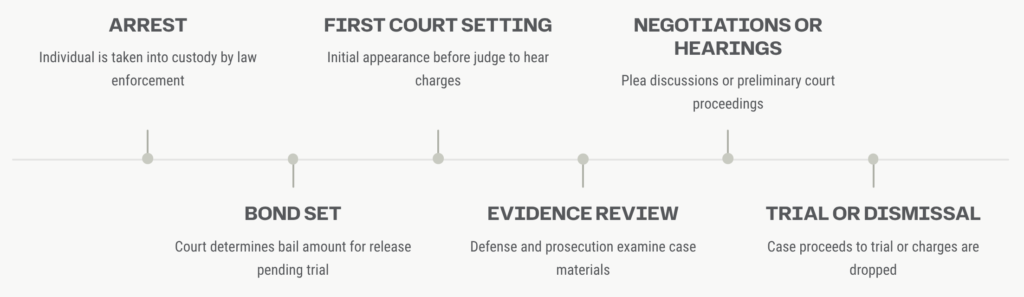
This process usually takes months, not days.
This resource was prepared by Spiegelhauer Law, a criminal defense practice serving Brazos County and the surrounding area.
If you still have questions about the process, you are welcome to call or text our office. We are happy to help you understand what is happening, even if you are not sure whether you need an attorney.
You do not have to make any decisions today. Calling is only for understanding what happens next.
Phone: (979) 450-7250
This page is general legal information and not legal advice. Viewing this page or downloading the guide does not create an attorney-client relationship.